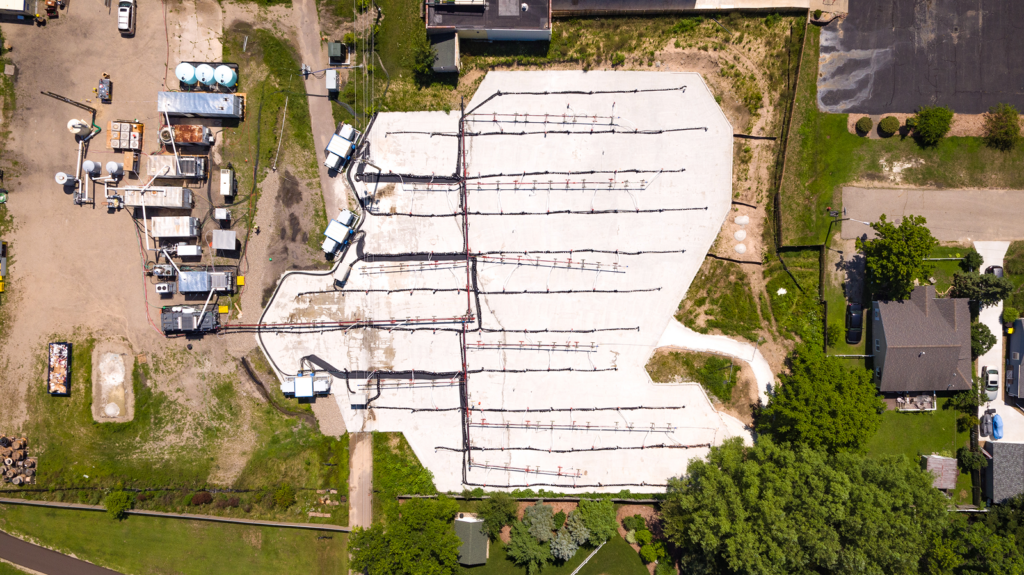
Former Tannery

Natural Flitration for PFAS

Remediation Solution

Remediation Approach

Technology

Media Treated

Water – Surface Water

Industry

Contaminant Type

Contaminant of Concern

PFAS | Perfluorooctane Sulfonate (PFOS), PFAS | Perfluorooctanoic Acid (PFOA)

Location

Michigan,
USA

Challenge

PFAS-impacted surface water flowing through collection vaults at a former tannery in northeast Michigan required treatment, with initial concentrations of 1,120 ng/L PFOS, 143 ng/L PFOA, and 4,530 ng/L total PFAS. A passive treatment approach was required that would maintain effective contact with flowing water without requiring active operational support.

Site Conditions

  • Unexpected Contaminants

Approach

Custom BAM-filled booms (8-inch diameter) and pillows (6-inch thick) were fabricated and sized to fit collection vault dimensions, maximizing BAM-to-water contact area. The passive system allowed surface water to flow through the BAM media over a 27-day pilot monitoring period.

Results

After 27 days of passive treatment, PFOS was reduced 74% (from 1,120 to 290 ng/L), PFOA 73% (from 143 to 38.5 ng/L), and total PFAS 73% (from 4,530 to 1,231 ng/L) in surface water flowing through collection vaults at the former tannery in northeast Michigan. The passive BAM-filled boom and pillow system—fabricated to custom dimensions to maximize contact area within the vault geometry—achieved these reductions without active operational support over the 27-day pilot monitoring period. Results demonstrated that passive BAM containment structures can deliver significant PFAS reduction in flowing surface water environments.

Related Case Studies

Learn What’s VIYABLE

Let's Begin Your Path Forward.