Electro-Thermal Dynamic Stripping Process (ET-DSP™)

Rapid, Uniform Heating Across Variable Resistivity.

ET-DSP™ is VIYA’s proprietary electrical resistance heating system. It delivers uniform heating throughout the treatment volume, enabling controlled mobilization and recovery of VOCs, SVOCs, NAPLs, and mixed-contaminantdespite variable subsurface conditions. 

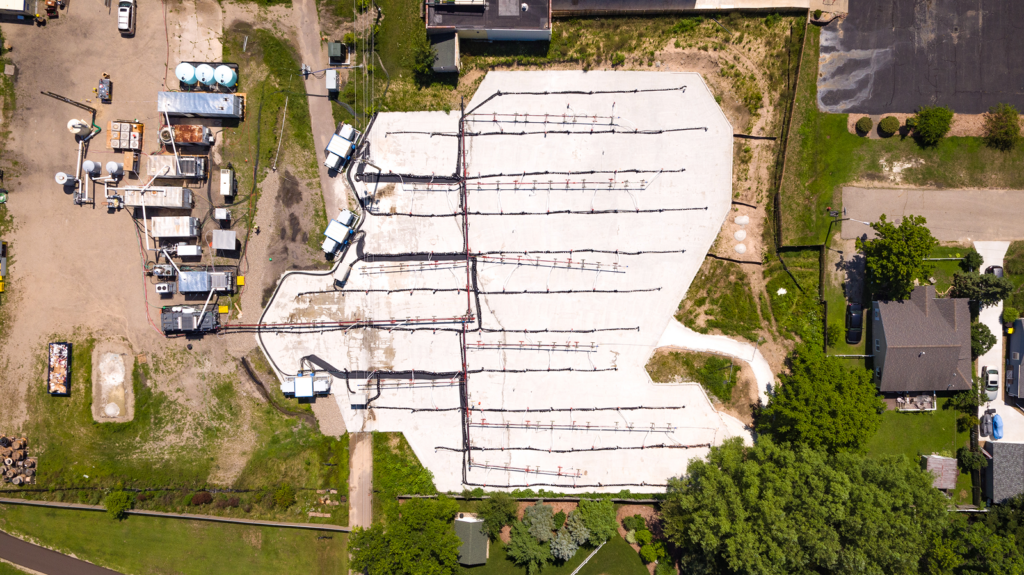
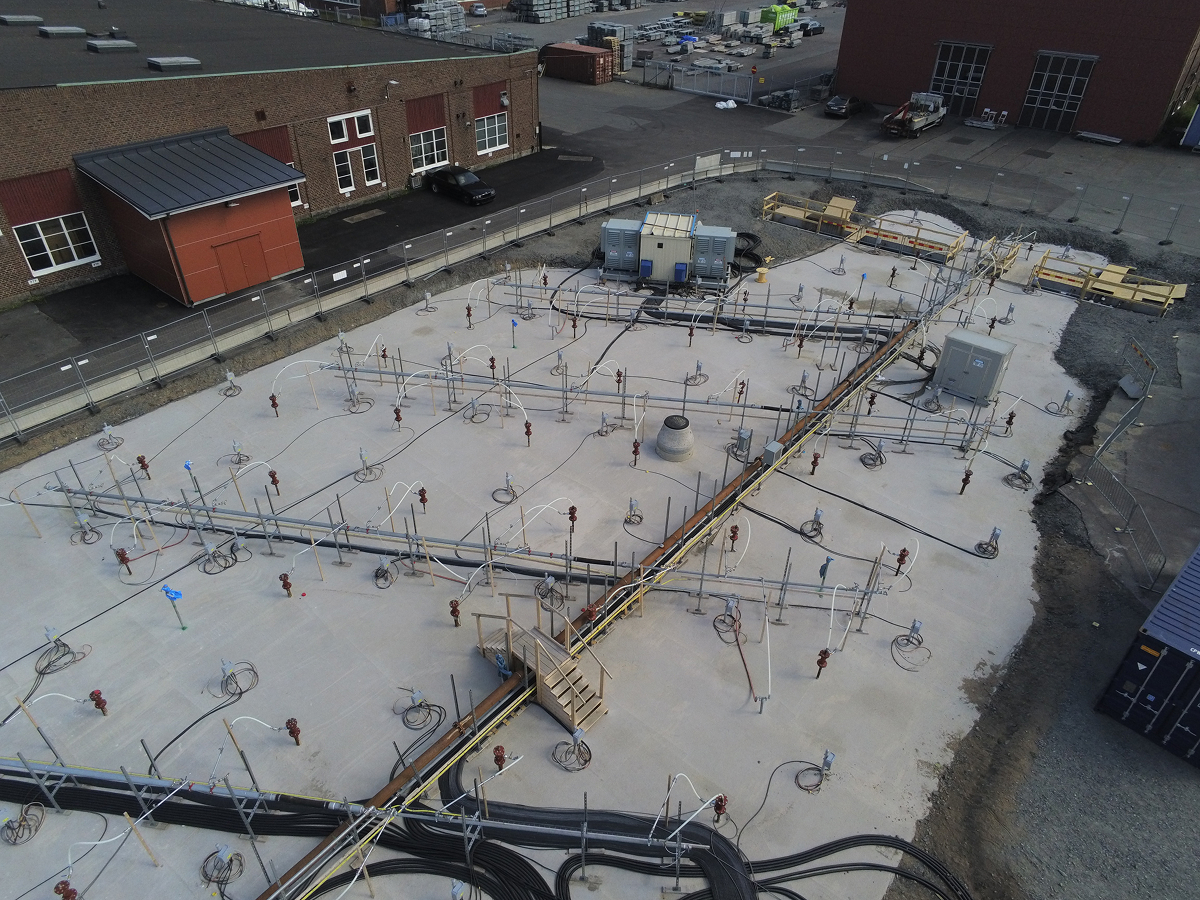
Innovation. Remediation site Thermal, ET-DSP

Why Teams Choose ET-DSP™

Rapid

Heat is generated throughout the treatment volume, supporting faster, more uniform temperature increases.

Uniform

Independent control by treatment interval balances heating across variable resistivity and subsurface conditions.

Efficient

Feedback control and recirculation cut wasted energy versus other ISTR methods.

Safe & Proven

Safely deployed on over 150 sites around the world.

Where ET-DSP™ Excels

Built for Heterogeneous Subsurface Conditions

ET-DSP™ is an in-situ thermal remediation solution, making it well suited for complex source zones where difficult geology, limited access, or active-site constraints make excavation and other disruptive remedies impractical.

Complex Contaminants

Challenging Site Conditions

Constrained Environments

How It Works

Energy-Efficient Heating with Independent Control

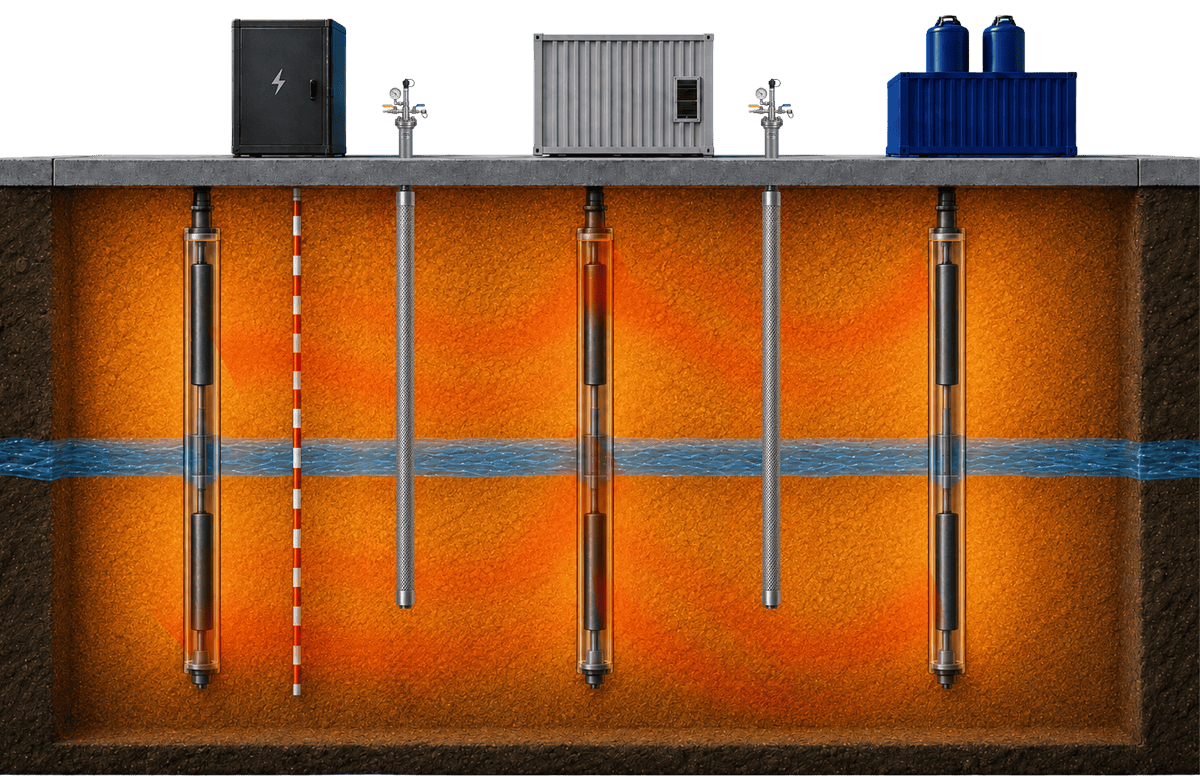
ET-DSP™ turns the subsurface into the heating element. By combining electrical resistance heating, conduction heat transfer, and convective steam flow, the system generates heat in situ and distributes it throughout the treatment zone, even across variable geologic conditions.

This level of control directs energy where and when it is needed, then reduces input as each interval reaches its target temperature. The result is faster remediation, lower energy consumption, and less wasted heat than with uniform, one-size-fits-all thermal treatment.

VIYA manufactures, owns, and operates its own ET-DSP™ equipment, with safety engineered into every system through UL 508A-listed assemblies, certified components, interlocks, redundant emergency shutdowns, and site-specific electrical protection.

ET-DSP diagram how it works

Power Delivery System (PDS)

Delivers precisely controlled electrical power to individual electrodes, allowing power input to be adjusted by location and depth as subsurface conditions change.

Water Circulation

Injects conditioned water, recovers extracted water, treats it, and recirculates it to the electrodes.

Treatment system

Extracted vapor and liquid streams are cooled, separated, and treated through a site-specific process train designed around the contaminants, flow rates, and discharge requirements.

Temperature Sensors

digiTAM™ temperature sensors provide continuous, real-time subsurface temperature data, giving operators the feedback needed to adjust electrode power and water injection as conditions change. Project data is available remotely through the ET-DSP™ web-based control system.

Multi-Phase Extraction (MPE)

Simultaneously recovers vapor, free product, and groundwater from a single well, reducing infrastructure, cost, and site footprint.

Electrodes

High-frequency, distributed control; power and water are tuned at each treatment interval as measured conditions change.

Delivers precisely controlled electrical power to individual electrodes, allowing power input to be adjusted by location and depth as subsurface conditions change.

Injects conditioned water, recovers extracted water, treats it, and recirculates it to the electrodes.

Extracted vapor and liquid streams are cooled, separated, and treated through a site-specific process train designed around the contaminants, flow rates, and discharge requirements.

digiTAM™ temperature sensors provide continuous, real-time subsurface temperature data, giving operators the feedback needed to adjust electrode power and water injection as conditions change. Project data is available remotely through the ET-DSP™ web-based control system.

Simultaneously recovers vapor, free product, and groundwater from a single well, reducing infrastructure, cost, and site footprint.

High-frequency, distributed control; power and water are tuned at each treatment interval as measured conditions change.

ET-DSP diagram how it works

Power Delivery System (PDS)

Water Circulation

Treatment system

Temperature Sensors

Multi-Phase Extraction (MPE)

Electrodes

Choosing the Right Path

The Right Technology Starts With the Right Assessment

No two contaminated sites are alike. ET-DSP™ performs well across a broad range of conditions, but the right remediation approach depends on the site. Our role is helping identify and execute the option that delivers the strongest combination of treatment performance, schedule certainty, cost control, and site-specific feasibility.

Explore other remediation approaches based on your site's conditions.

High Permeability, Discrete sources

Where steam can move readily through permeable soils, SEE can provide rapid, efficient heating and contaminant recovery.

Metals & Thermally Stable Contaminants

Contaminants that cannot be volatilized or thermally degraded may be better addressed with chemical, biological, or stabilization technologies

Bedrock & Higher-Temperature Treatment

Where bedrock or contaminants require temperatures beyond the practical range of ERH, TCH / IT-DSP™ may be the better thermal approach.

Case Studies

ET-DSP™ in Action.
Proven Results.

Talk to VIYA

Is ET-DSP™ the Right Thermal Solution for Your Site?

Every remediation project begins with understanding the site. Our team evaluates geology, contaminants, treatment objectives, and site constraints to determine whether ET-DSP™, IT-DSP™, SEE or an integrated approach will deliver the best outcome.

Learn What’s VIYABLE

Let's Begin Your Path Forward.