
Inductive-Thermal Dynamic Stripping Process (IT-DSP™)

Engineered Heat for Difficult Contaminants

IT-DSP™ is VIYA’s proprietary induction heating technology. It delivers energy directly into the heater casing and surrounding soil, reaching temperatures up to 1292°F at more than triple the output of conventional electric heating, enabling reliable treatment of hard, low-permeability zones and high-boiling-point contaminants such as PFAS and 1,4-Dioxane.

Gimo case study

Why Teams Choose IT-DSP™

High Output

Delivers more than triple the power of conventional electric heating technologies.

High-Temperature

Reaches up to 1292°F, sufficient to treat high-boiling-point contaminants.

Flexible

Deployable in-situ, ex-situ, or in batch to match site conditions.

Safe & Certified

UL, CSA, and Intertek-certified, with engineered grounding and emergency shutdowns.

Where IT-DSP™ Excels

Built for High-Temperature Remediation

IT-DSP™ is a high-output induction heating technology for in situ and ex situ applications, well suited to dry soils, low-permeability formations, bedrock, and contaminants requiring elevated treatment temperatures.

Complex Contaminants

Challenging Site Conditions

Constrained Environments

How It Works

Direct-Contact Induction for Sustainable Heating 

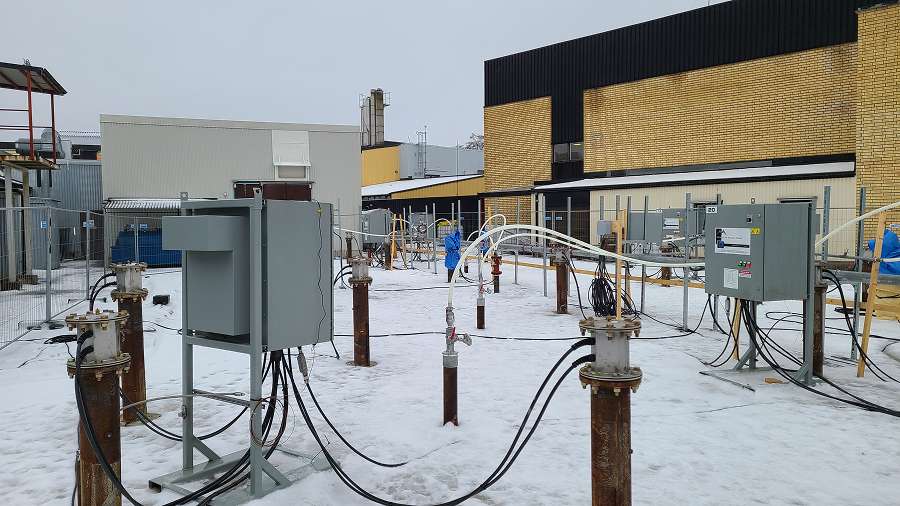
IT-DSP™ uses direct-contact induction to deliver energy into the steel heater casing and surrounding soil, providing efficient and controlled heating across a wide range of subsurface conditions. Each inverter supplies up to 50 kilowatts of power, with output exceeding 1,000 watts per foot, helping support predictable treatment in dense soils, low-permeability zones, and bedrock.

VIYA manufactures, owns, and operates its own IT-DSP™ equipment, with safety engineered into every system through UL 508A-listed assemblies, certified components, interlocks, redundant emergency shutdowns, and site-specific electrical protection.

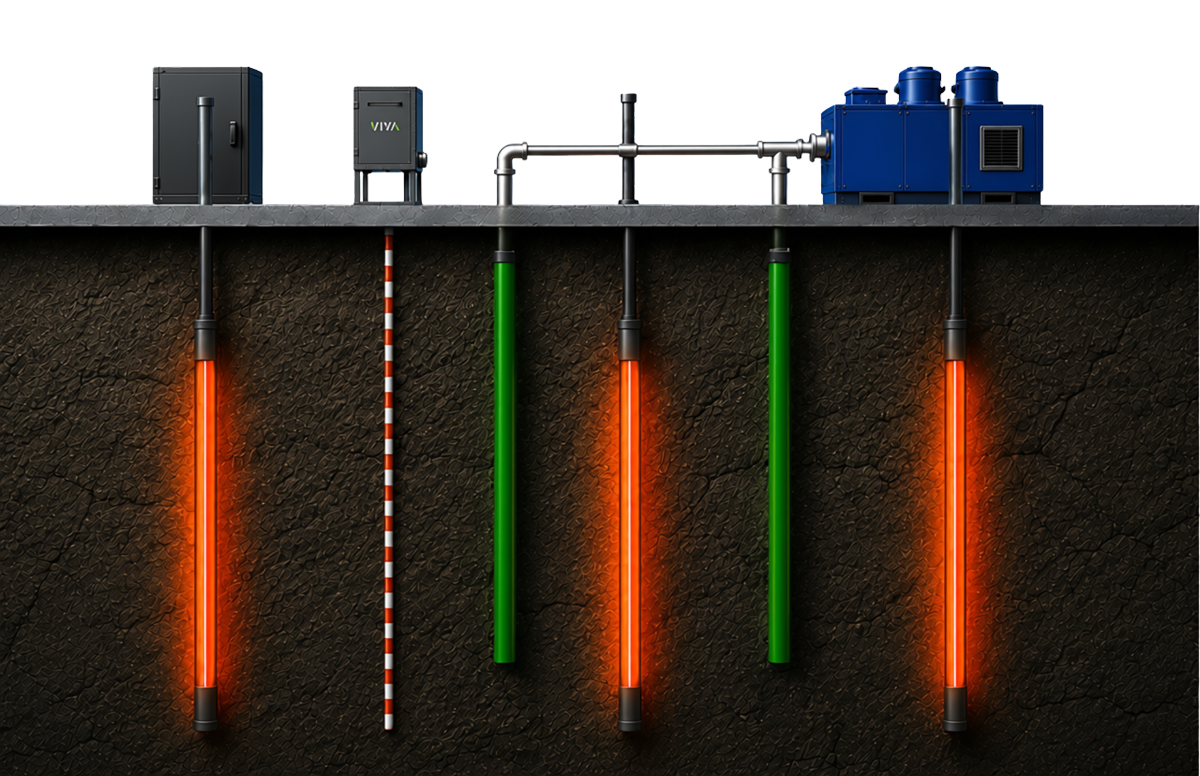
IT-DSP How it works diagram

Remote Distribution Panel (RDP)

Receives site power and distributes three-phase power to groups of Induction Control Inverters (ICIs). The RDP provides the transformer, switching, and power distribution functions required to supply and control the IT-DSP™ heating system.

Induction Coil Inverter (ICI)

Converts incoming AC power into controlled, high-frequency AC for the IT-DSP™ heaters. Each ICI is rated at up to 50 kW and can supply multiple heaters, allowing power input to be adjusted based on site conditions and thermal performance. CSA/UL listed (UL508A standard) in North America

Treatment system

Extracted vapors and liquids are conveyed to an aboveground treatment system engineered for the contaminants and operating conditions at each site. Treatment may include cooling and condensation, phase separation, filtration, air stripping, activated carbon, chemical conditioning, or other processes required to meet project-specific discharge criteria.

IT-DSP™ Heater

Installed inside a steel heater casing within the treatment zone. High-frequency current through the heater generates an alternating magnetic field that induces electrical currents directly within the steel casing, causing the casing itself to heat. Thermal energy is then transferred directly into the surrounding formation by conduction.

Soil Vapor and Multiphase Extraction

Extraction wells maintain pneumatic and, where required, hydraulic control while recovering volatilized contaminants, steam, groundwater, and mobilized NAPL from the treatment zone.

Temperature Sensors

Subsurface temperatures are monitored continuously throughout thermal operations using distributed temperature sensor wells. High-temperature IT-DSP™ applications use digiTC™ thermocouple arrays capable of monitoring the elevated temperatures associated with high-temperature treatment. digiTAM™ temperature monitoring may also be used for lower-temperature applications

Receives site power and distributes three-phase power to groups of Induction Control Inverters (ICIs). The RDP provides the transformer, switching, and power distribution functions required to supply and control the IT-DSP™ heating system.

Converts incoming AC power into controlled, high-frequency AC for the IT-DSP™ heaters. Each ICI is rated at up to 50 kW and can supply multiple heaters, allowing power input to be adjusted based on site conditions and thermal performance. CSA/UL listed (UL508A standard) in North America

Installed inside a steel heater casing within the treatment zone. High-frequency current through the heater generates an alternating magnetic field that induces electrical currents directly within the steel casing, causing the casing itself to heat. Thermal energy is then transferred directly into the surrounding formation by conduction.

Extraction wells maintain pneumatic and, where required, hydraulic control while recovering volatilized contaminants, steam, groundwater, and mobilized NAPL from the treatment zone.

Extracted vapors and liquids are conveyed to an aboveground treatment system engineered for the contaminants and operating conditions at each site. Treatment may include cooling and condensation, phase separation, filtration, air stripping, activated carbon, chemical conditioning, or other processes required to meet project-specific discharge criteria.

Subsurface temperatures are monitored continuously throughout thermal operations using distributed temperature sensor wells. High-temperature IT-DSP™ applications use digiTC™ thermocouple arrays capable of monitoring the elevated temperatures associated with high-temperature treatment. digiTAM™ temperature monitoring may also be used for lower-temperature applications

IT-DSP How it works diagram

Remote Distribution Panel (RDP)

Induction Coil Inverter (ICI)

Treatment System

IT-DSP™ Heater

Temperature Sensors

Soil Vapor and Multiphase Extraction

Choosing the Right Path

The Right Technology Starts With the Right Assessment

No two contaminated sites are alike. While IT-DSP™ is highly adaptable across a wide range of contaminants and site conditions, the right remediation approach depends on the specific challenges and objectives of each site. We work with our clients to identify and execute the solution that provides the best balance of treatment performance, schedule, cost, and site-specific feasibility.

Explore other remediation approaches based on your site's conditions.

Heterogeneous Subsurface

For VOCs, SVOCs, NAPLs, and mixed-contaminant source zones where high-temperature conductive heating is not required, VIYA’s ET-DSP™ technology provides rapid, uniform heating across heterogeneous and variable-resistivity formations with high energy efficiency.

Permeable Source Zone

Where subsurface permeability allows steam to move effectively through the treatment zone, Steam Enhanced Extraction (SEE) can rapidly deliver heat, volatilize contaminants, and mobilize NAPL for recovery. In suitable formations, SEE can provide an efficient alternative to electrically driven thermal treatment.

Metals & Inorganic Contaminants

When heavy metals are present, the recovery and treat mechanism will not fully remove or degrade them. Chemical and biological treatment makes metals easier to contain or remove by changing how they behave, rather than destroying them.

Case Studies

IT-DSP™ in Action.
Proven Results.

Talk to VIYA

Is IT-DSP™ the Right Thermal Solution for Your Site?

Every remediation project begins with understanding the site. Our team evaluates geology, contaminants, treatment objectives, and site constraints to determine whether IT-DSP™, ET-DSP™, SEE or an integrated approach will deliver the best outcome.

Learn What’s VIYABLE

Let's Begin Your Path Forward.