Excavation vs. In-Situ Remediation
When evaluating excavation vs in-situ remediation, environmental consultants, engineers, and property owners must consider more than the immediate cost of removing contaminated soil.
Traditional excavation and off-site disposal, commonly known as dig-and-haul, can be effective for shallow, accessible contamination. However, modern thermal, chemical, and biological treatment technologies may deliver better outcomes for complex sites by reducing contaminant mass, addressing groundwater impacts, minimizing site disturbance, and potentially lowering total remediation costs. While excavation remains an important remediation method, it is not always the most technically appropriate or environmentally sustainable solution.
When comparing excavation versus in-situ remediation, the critical differences extend beyond construction costs. They include cleanup timelines, contaminant destruction, long-term groundwater performance, site disturbance, and overall environmental impact. In many cases, traditional excavation addresses the physical location of contaminated material without necessarily addressing the underlying contaminant chemistry or the groundwater impacts associated with it.
Modern in-situ treatment technologies offer another approach: addressing contamination directly within the subsurface rather than relying exclusively on excavation, transportation, and disposal.
Excavation vs. In-Situ Remediation: Understanding the Difference
Excavation and disposal is a removal-based remediation strategy. Contaminated soil is physically excavated and transported to an approved receiving facility for treatment, containment, or disposal.
In-situ remediation treats contamination within the ground, using engineered technologies to extract, chemically transform, biologically degrade, or immobilize contaminants without requiring large-scale soil excavation.
The distinction is important because removing contaminated soil from a property does not necessarily mean the contaminants have been destroyed or that all associated groundwater impacts have been resolved.
Each approach has strengths and limitations, and neither is universally superior.
| Evaluation factor | Excavation and off-site disposal | In-situ remediation |
|---|---|---|
| Cost | Excavation, hauling, tipping fees, backfill, dewatering, and restoration | System installation, energy or reagents, operations, and monitoring |
| Schedule | Often faster for shallow, accessible contamination | Varies by technology; thermal can provide relatively rapid source-zone treatment |
| Contaminant fate | Removes contaminants from the site; final fate depends on receiving facility | Can extract, destroy, transform, or immobilize contaminants |
| Groundwater performance | Removes accessible source material but may leave dissolved or residual groundwater contamination | Can directly target saturated soils, source zones, and groundwater plumes |
| Site disturbance | Significant earthmoving, transportation, and restoration requirements | Generally smaller surface footprint, with drilling and treatment infrastructure |
| Environmental impact | Trucking emissions, disposal demand, material consumption, and land disturbance | Generally less bulk material handling, but potential energy, reagent, and water demands |
These differences become especially important when contamination extends beneath operating facilities, roadways, buildings, or the groundwater table.
1. Cost Comparison: Is In-Situ Remediation Cheaper Than Excavation?
The cost of remediation is frequently evaluated using a price per tonne or cubic yard of contaminated material.
Although useful for estimating excavation and disposal costs, this approach can overlook significant project expenses and long-term liabilities. A comprehensive dig-and-haul budget must account for excavation and loading, waste characterization, transportation, disposal fees, excavation support, groundwater management, imported backfill, compaction, and surface restoration.
Where impacts extend below the groundwater table, additional costs may arise from dewatering, water treatment, excavation stability, and hydraulic control.
Contamination beneath buildings, roads, or active industrial infrastructure can further complicate excavation, potentially requiring demolition, temporary relocation, or major operational interruptions. In-situ technologies can eliminate or reduce many of these activities by treating contamination in place.
How treatment technology affects cost
In-situ chemical oxidation (ISCO), chemical reduction (ISCR), and biological remediation can be economically attractive where reagents or biological amendments can be effectively delivered throughout the impacted zone.
Thermal remediation generally requires greater upfront capital and energy expenditure, but it can provide substantial advantages for concentrated source zones, deep contamination, and difficult subsurface conditions. Its ability to deliver controlled, measurable treatment across a defined subsurface volume can provide greater predictability in contaminant mass removal and reduce uncertainty in achieving remediation objectives. For complex sites, this enhanced treatment reliability can help mitigate performance risks, minimize the potential for contaminant rebound, and provide greater confidence in long-term remediation outcomes.
Technologies such as VIYA’s Electro-Thermal Dynamic Stripping Process (ET-DSP™), Inductive-Thermal Dynamic Stripping Process (IT-DSP™), and Steam Enhanced Extraction (SEE) can treat contaminated soil and groundwater without removing the entire impacted soil volume.
For complex sites, the resulting reduction in excavation, transportation, infrastructure disruption, and residual contamination management can justify the investment.
However, in-situ treatment is not automatically less expensive. Energy consumption, treatment duration, reagent demand, contaminant distribution, and monitoring all affect project economics.
The appropriate comparison is total lifecycle remediation cost not simply the cost of excavation versus the cost of treatment installation.
A technically defensible cost evaluation should include construction, operations, waste management, restoration, monitoring, and any additional remediation required to achieve the regulatory endpoint.
2. Remediation Schedule: Does Excavation Really Deliver Faster Results?
Excavation is often considered the fastest remediation option. For small, shallow, accessible contamination, that may be correct. Excavation can remove contaminated material within days or weeks, depending on project size and site conditions.
But there is an important difference between completing excavation and completing remediation.At more complicated sites, construction schedules can be affected by waste disposal capacity, transportation logistics, groundwater dewatering, infrastructure protection, and backfill requirements.
More importantly, excavation may not eliminate groundwater contamination that has migrated beyond the excavation limits. When impacted groundwater remains, additional remediation and monitoring may be required before regulatory closure is achieved.
How long does in-situ remediation take?
The treatment schedule depends on the technology and the target contaminants.
Thermal remediation: Often delivers aggressive treatment of concentrated source zones over months rather than years. The Federal Remediation Technologies Roundtable (FRTR) identifies approximately six to nine months as a typical soil-treatment period for many in-situ thermal applications, although larger or more complex sites may require longer.
Chemical remediation: Can achieve relatively rapid reductions where reagent distribution, contact time, and geochemical conditions are favorable. Multiple injection events or additional monitoring may be necessary.
Biological remediation: Often operates over longer periods because treatment relies on microbial processes, contaminant biodegradability, and suitable subsurface conditions.
The schedule comparison should distinguish between active treatment duration, post-treatment verification, and the time required to satisfy regulatory closure criteria.
A remediation strategy that finishes construction quickly but leaves an unresolved groundwater plume may not provide the fastest route to site closure.
3. Contaminant Destruction: Are We Eliminating Contamination or Relocating It?
One of the most significant differences between excavation and treatment is what ultimately happens to the contaminants.
When soil is excavated and placed in an approved landfill, contaminants are transferred from the original site into a managed waste facility. This can effectively reduce exposure and environmental risk at the source property. However, landfilling does not generally destroy the contaminants.
It is important to distinguish between contaminant removal, destruction, transformation, and containment.
Thermal Remediation
Thermal technologies apply controlled heat to the subsurface to improve contaminant volatility, mobility, and recovery. As contaminants are mobilized, engineered vapor and liquid extraction systems collect the recovered material for aboveground treatment or disposal.
Thermal remediation can achieve substantial contaminant mass removal, particularly for volatile organic compounds (VOCs), chlorinated solvents, and non-aqueous phase liquids. However, thermal extraction should not automatically be described as in-situ contaminant destruction. The final disposition of the recovered contaminant streams determines whether they are destroyed, recycled, or transferred elsewhere.
Chemical Remediation
In-situ chemical oxidation and reduction can transform susceptible contaminants through engineered chemical reactions.
For example, appropriate oxidants can degrade chlorinated solvents and petroleum hydrocarbons, potentially reducing contaminant mass through chemical transformation and, in some cases, mineralization. Treatment effectiveness depends on contaminant chemistry, reaction kinetics, reagent demand, and effective contact throughout the treatment zone.
Biological remediation
Biological treatment relies on microbial processes to degrade susceptible contaminants under favorable environmental conditions. Depending on the target contaminants, biological treatment may transform organic compounds into less harmful substances or ultimately mineralize them.
Biological transformation can also generate intermediate compounds, making monitoring and treatment design essential. VIYA’s BAM technology can be incorporated into site-specific chemical and biological treatment strategies to support contaminant management and treatment performance.
Why the distinction matters
A reduction in groundwater concentration is not necessarily equivalent to complete contaminant destruction. For example, a 99% concentration reduction at a monitoring well does not establish that 99% of the original contaminant mass has been destroyed.
A defensible performance evaluation should consider contaminant mass recovered, destroyed or transformed, remaining in the treatment zone, and transferred into residual waste streams. This distinction is fundamental to evaluating the long-term environmental benefits of competing remediation strategies.
4. Groundwater Performance: Where Excavation Can Fall Short
Groundwater is frequently one of the most challenging aspects of contaminated site remediation. Excavation can effectively remove impacted soil, but groundwater contamination may extend beyond the excavation footprint, into deeper formations, or through fractured bedrock.
Chlorinated solvents such as trichloroethylene (TCE) and tetrachloroethylene (PCE) can be especially persistent. These compounds may migrate into low-permeability soil layers, become trapped as residual non-aqueous phase liquids, or remain within the geological matrix for extended periods.
Even after readily accessible source material has been removed, contaminants stored within the subsurface can gradually diffuse back into groundwater. This process, commonly referred to as back diffusion, can produce concentration rebound and extend remediation timelines.
Treating the source and groundwater together
In-situ technologies offer the potential to address contamination within both soil and groundwater.
Thermal treatment can mobilize and recover contaminants from difficult source zones, including low-permeability formations and fractured media. Chemical treatment can target susceptible contaminants directly within groundwater, while biological treatment may provide continuing degradation of residual dissolved contamination.
An integrated treatment program may combine aggressive thermal source-zone remediation with subsequent chemical or biological treatment of residual contamination. This approach is particularly relevant where excavation alone would leave substantial contamination outside the accessible removal area.
Ultimately, groundwater performance must be assessed through concentration trends, contaminant mass discharge, plume behavior, rebound monitoring, and the achievement of site-specific cleanup objectives.
Removing contaminated soil does not automatically eliminate the groundwater source, and groundwater remediation should not be treated as a secondary consideration.
5. Environmental Impact: Excavation Can Create More Disturbance Than Necessary
Traditional dig-and-haul can involve significant physical activity, including heavy equipment operation, soil stockpiling, repeated truck movements, imported backfill, and surface reconstruction.
Depending on site conditions, excavation can generate dust, noise, diesel emissions, and substantial disruption to surrounding activities. It may also require the removal of existing pavement, buried utilities, landscaping, or infrastructure.
For operational industrial properties, these disturbances can create costs and risks that are difficult to capture in a conventional soil disposal estimate.
Reducing the remediation footprint
In-situ treatment typically relies on installed wells, electrodes, heating elements, injection points, extraction systems, and monitoring infrastructure rather than bulk excavation.
This can allow remediation to proceed beneath existing facilities and transportation corridors while reducing the need for demolition, soil transportation, and extensive restoration. However, in-situ technologies also carry environmental impacts.
Thermal systems require energy and may consume water or fuel. Chemical treatments require reagent manufacturing, transportation, and handling. Biological treatments require amendment delivery and monitoring.
Consequently, environmental performance should be evaluated using lifecycle indicators such as greenhouse gas emissions, energy consumption, material use, water consumption, waste generation, and land disturbance. The objective is not to assume that in-situ treatment is always greener, but to identify the remediation strategy with the most favorable overall environmental outcome.
VIYA Case Studies: Proven Treatment Performance in the Field
The advantages of advanced remediation technologies are particularly evident at sites where conventional excavation presents significant technical, logistical, or environmental challenges.
VIYA’s project portfolio demonstrates the application of thermal, chemical, and biological treatment technologies to address complex soil and groundwater contamination, reduce site disturbance, and achieve measurable remediation outcomes.
From treating chlorinated solvents beneath active infrastructure to remediating contamination in fractured bedrock and enabling the reuse of treated soils, these projects highlight the importance of selecting remediation strategies based on site-specific conditions rather than defaulting to excavation and disposal.
Explore VIYA’s remediation case studies:
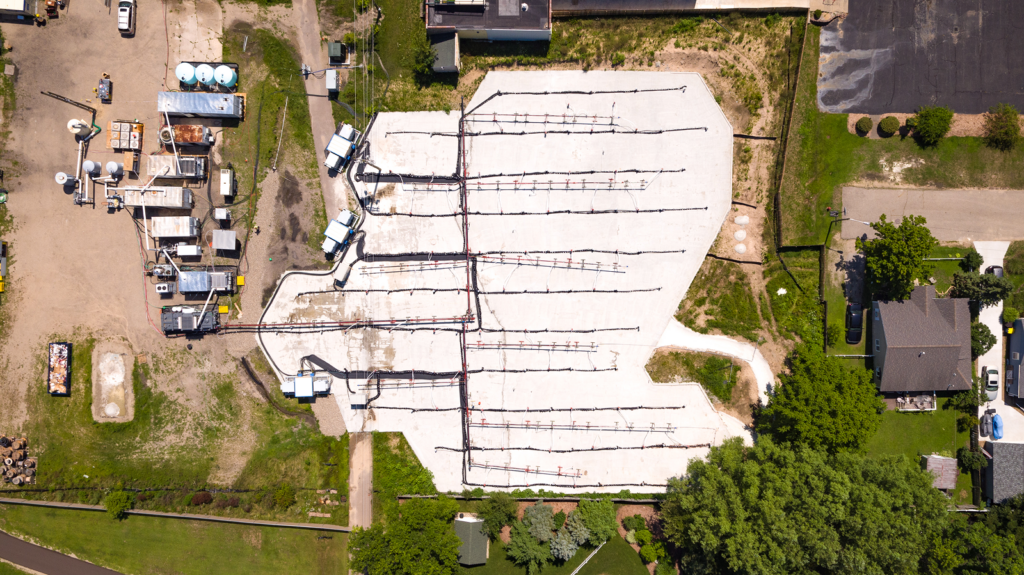
Cleburn Street Superfund Site, Nebraska – Thermal Remediation Beneath Active Infrastructure
Sweden – Thermal Remediation of Chlorinated Solvents in Fractured Bedrock
Minnesota – Chemical Treatment and On-Site Reuse of Contaminated Soil
These applications demonstrate how site-specific treatment technologies can provide effective alternatives to conventional dig-and-haul, particularly where groundwater impacts, subsurface complexity, infrastructure constraints, or disposal requirements influence remediation decisions.
When Is Excavation Still the Better Remediation Option?
Excavation remains a practical and effective remediation option in the right circumstances, particularly when impacted soils are readily accessible, contamination is limited in extent, or soil removal is already part of planned site development.
The decision ultimately comes down to whether excavation alone can achieve the required remediation objectives or whether an alternative or complementary treatment approach would provide greater value. For some projects, a combination of targeted excavation and advanced treatment may offer the most effective solution, allowing each method to be applied where it provides the greatest benefit.
At VIYA Environmental, remediation is driven by site-specific conditions and measurable outcomes, not a predetermined approach. The goal is to select the right combination of technologies to achieve effective, reliable, and sustainable results.
Choosing the Right Remediation Technology: A More Effective Decision Framework
The most defensible remediation strategy begins with a detailed understanding of the contaminants, geology, groundwater conditions, infrastructure, and desired site endpoint.
A comprehensive remedial alternatives evaluation should answer five fundamental questions.
1. Which approach provides the lowest total lifecycle cost?
Compare excavation, transportation, disposal, restoration, treatment operations, verification, and long-term monitoring rather than relying exclusively on unit rates.
2. Which approach provides the most reliable path to achieving cleanup objectives?
Evaluate the difference between construction completion, treatment completion, sustained remediation performance, and regulatory closure.
3. What happens to the contaminants?
Distinguish between physical removal, extraction, chemical or biological destruction, immobilization, and off-site transfer.
4. How will groundwater respond?
Consider source-zone persistence, contaminant mass discharge, back diffusion, concentration rebound, and long-term plume stability.
5. What are the environmental and operational impacts?
Assess trucking, greenhouse gas emissions, energy and water use, waste generation, infrastructure disruption, and site restoration.
These questions help determine whether excavation, in-situ treatment, ex-situ treatment, or an integrated remediation strategy is best suited to the site.
VIYA Environmental’s technology portfolio supports this site-specific approach, combining thermal, chemical, biological, and hybrid treatment solutions to address complex contaminated soil and groundwater conditions.
Moving Beyond Traditional Dig-and-Haul
Excavation and off-site disposal has an established place in environmental remediation, but familiarity should not determine remedy selection.
Modern remediation challenges increasingly involve deep contamination, impacted groundwater, difficult geological conditions, and active infrastructure that cannot easily be disturbed. In these environments, the limitations of conventional excavation become more apparent.
In-situ thermal, chemical, and biological treatment technologies provide alternatives that can reduce contaminant mass, address groundwater source zones, limit physical disturbance, and potentially improve total project economics.
The strongest approach is not always the fastest excavation or the lowest initial treatment bid. It is the solution that most reliably achieves remediation objectives while managing the full economic, technical, and environmental consequences. The future of contaminated site remediation is not simply about moving contaminated material. It is about selecting the right technology to address the contamination itself.
For environmental consultants, property owners, industrial operators, and regulators, the question should no longer be, “How much contaminated soil needs to be excavated?” It should be: “What is the most effective, sustainable, and cost-efficient way to remediate this site?”