Home > Case Studies > Former Metal Shop
Remediation Solution
Remediation Approach
Technology
Media Treated
Industry
Contaminant Type
Contaminant of Concern
Location
Multiple chlorinated solvents—including 1,1-DCE (19.5 µg/L), cis-1,2-DCE (2,570 µg/L), TCE (1,631.9 µg/L), and vinyl chloride (257.5 µg/L)—impacted groundwater in a silty-to-sandy clay matrix at a former metal shop in Indianapolis. Contaminant migration toward off-site receptors was confirmed, requiring both source area treatment and a containment barrier.

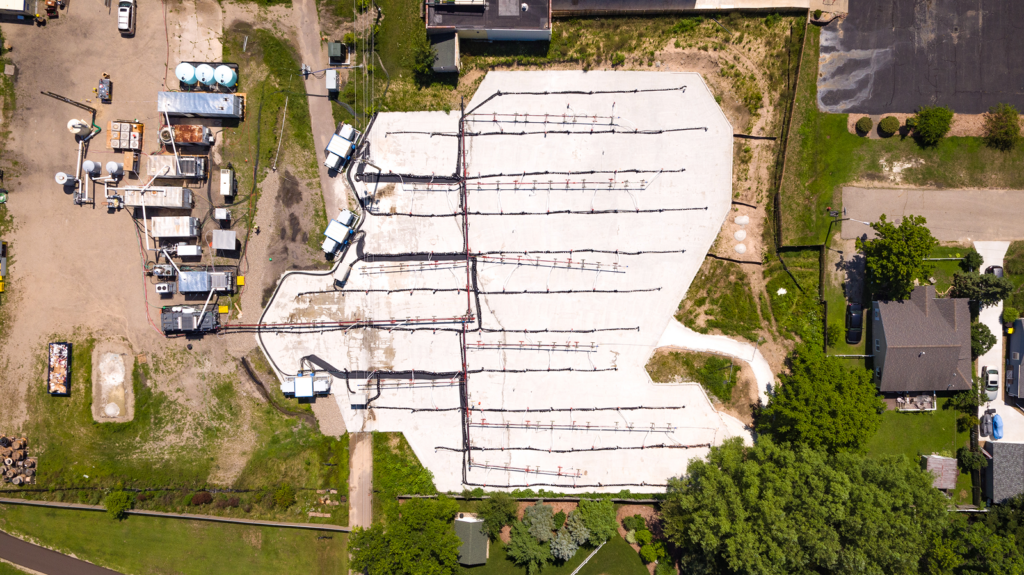
A dual-strategy injection program was implemented: 48 BAM Ultra injection points and 20 ABC+ injection points (68 total) were placed in a barrier wall configuration to intercept off-site migration, with a concentrated hot-spot treatment cluster around MW-14. Treatment depth targeted the silty-to-sandy clay unit.
Within three months of the dual-strategy injection program, greater than 96% reduction was achieved across all monitored chlorinated solvent compounds at the former metal shop in Indianapolis. MW-14—the primary hot-spot target—reached non-detect levels for all contaminants, including 1,1-DCE, cis-1,2-DCE, TCE, and vinyl chloride. Successful containment of off-site contaminant migration was confirmed through downgradient monitoring, validating the barrier wall configuration of 68 combined BAM Ultra and ABC+ injection points. Treatment was completed in the silty-to-sandy clay matrix without disruption to the active facility or surrounding receptors.
Superfund ISTR Under Strict Air Emission Limits
Bioremediation for PFAS
High-Profile ISTR of Historic Chemical Disposal Impacts