Thermal Remediation Services
Engineered From the Ground Up
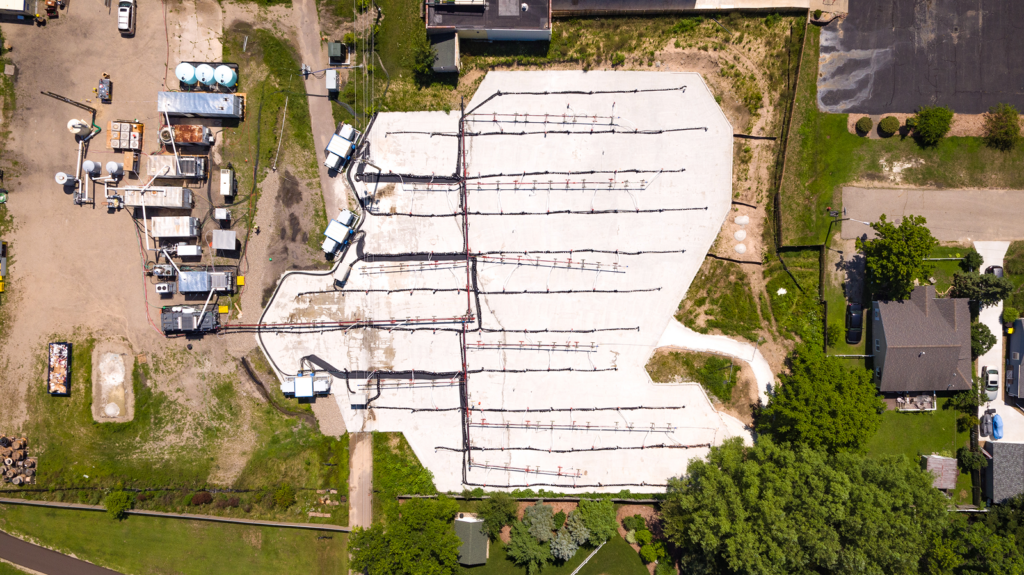
Built for difficult ground and demanding contaminants, VIYA’s in-situ and ex-situ thermal remediation services treat VOCs, SVOCs, and DNAPL in soil and ground water using ERH, TCH, and steam. VIYA delivers faster, more complete cleanup across tight clays, mixed soils, fractured bedrock, and complex sites.
- Faster: Shortens remediation timelines compared with passive methods.
- Effective: Reaches contaminants in clays, silts, and fractured rock.
- Controlled: Precise heating and real-time monitoring ensure predictable results.
- Comprehensive: Treats dissolved contaminants and NAPLs simultaneously.
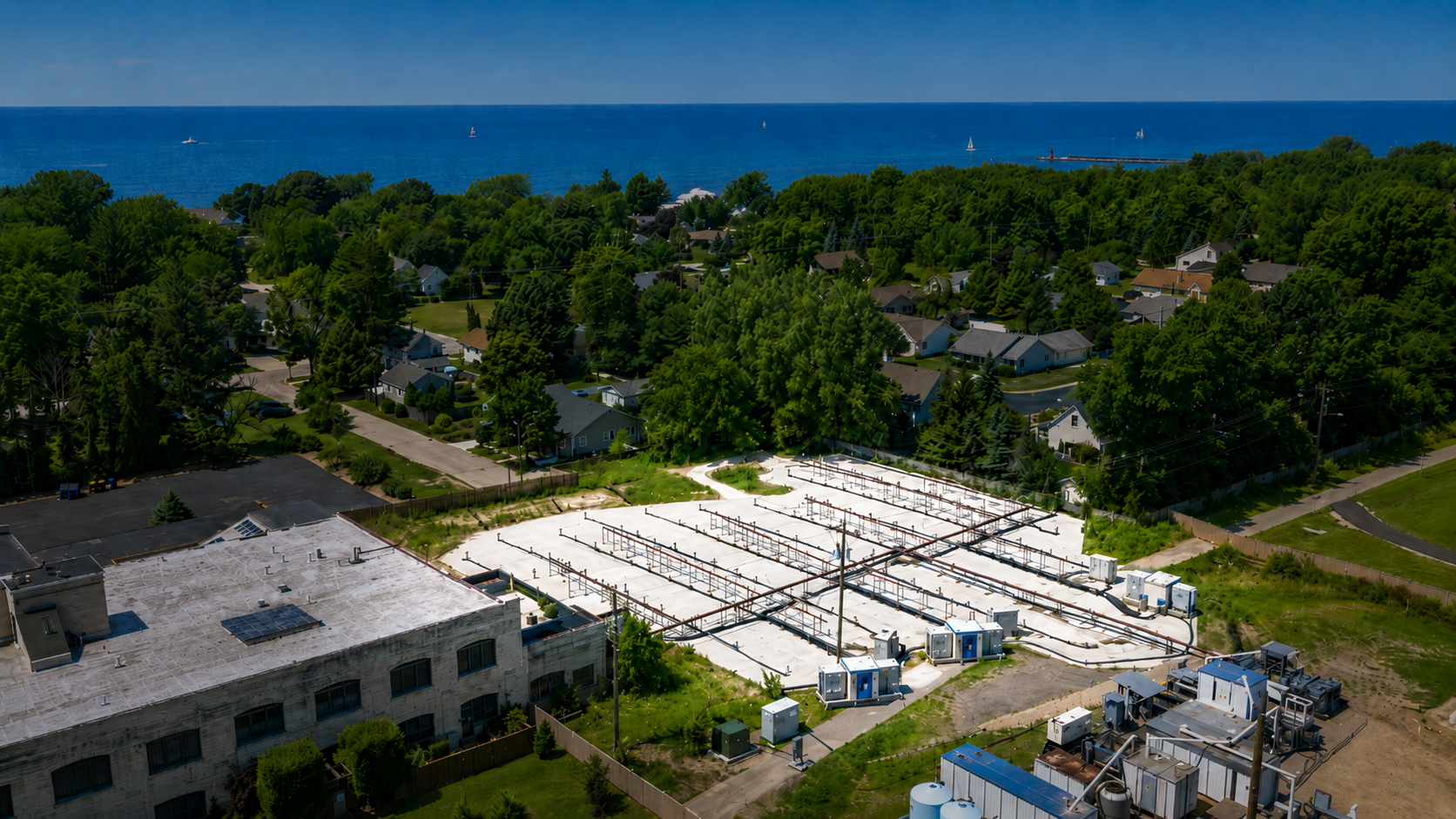
- Low disruption: Avoids large-scale excavation, allowing surface operations to continue.
>99.9%
Contaminant Removal Efficiency
3
Thermal Technologies
In-Situ and Ex-Situ
Flexible Deployment
150+ projects
Thermal remediation projects worldwide
Our Technologies
Thermal Remediation Methods
Thermal technologies are highly versatile and can be applied across a wide range of subsurface conditions. Our thermal technologies use real-time monitoring, precision control, and site-specific design to improve visibility and reliability during remediation.
ERH
Electrical Resistance Heating
ERH passes electrical current between electrodes installed in the subsurface. Resistance to current flow through soil moisture and the formation generates heat throughout the treatment zone.
- Uniform heating across heterogeneous formations
- Effective for volatile and selected semi-volatile contaminants
- Well suited to fine-grained, low-permeability source zones above and below the water table
PATENTED
ET-DSP™
ET-DSP™ is VIYA’s patented Electrical Resistance Heating technology. It combines volumetric subsurface heating with integrated water injection, vapor and liquid extraction, and real-time monitoring. This allows operators to maintain electrical continuity, manage subsurface conditions, and promote contaminant recovery from heterogeneous soil and groundwater source zones.
TCH
Thermal Conductive Heating
TCH uses heater wells to transfer thermal energy directly into the formation by conduction. TCH does not rely on soil electrical conductivity or moisture to generate heat and can achieve higher treatment temperatures than ERH. System design accounts for soil moisture, groundwater influx, and the energy required to heat and boil water within the treatment zone.
- Effective for higher boiling-point contaminants including PFAS
- Precise, targeted heating without moisture dependence
- Excels in fractured or low-conductivity rock formations
PATENTED
IT-DSP™
Inductive-Thermal Dynamic Stripping Process is an advanced TCH technology that applies targeted inductive heating for challenging contaminants in soil and bedrock, with in situ and ex situ applications, including high-boiling-point compounds such as PFAS. Laboratory testing of VIYA’s IT-DSP™ technology successfully volatilized PFAS and achieved greater than 99.9% removal from the tested soil.
SEE
Steam-Enhanced Extraction
SEE injects steam into permeable formations to heat the subsurface, increase contaminant vapor pressure, reduce NAPL viscosity, and accelerate contaminant recovery. Vapor, contaminated water, and recoverable NAPL are captured through extraction wells under controlled hydraulic and pneumatic conditions.
- Effective for recovering volatile contaminants and mobile NAPL
- Best suited to permeable sands, gravels, and connected fractures
- Complements ERH and TCH in integrated remedies
LICENSED
SEE
Steam Enhanced Extraction is a rapid, cost-efficient thermal remediation approach. It is commonly implemented in high-permeability zones, where it is often integrated with ET-DSP™ or IT-DSP™ systems to enhance subsurface heating and contaminant recovery.
How it Works
Engineered Heat. Guided Recovery.
Thermal remediation systems deliver controlled heat into the subsurface, increasing contaminant mobility and enabling recovery through extraction wells. Uniform heating helps release contaminants from soil, groundwater, and bedrock, allowing vapours and fluids to be directed to the extraction system for treatment. By overcoming mass-transfer limitations, thermal methods can reach and remove contaminants that are difficult to access using conventional remediation technologies.
VIYA owns and operates its full thermal equipment fleet, including customized electrodes, power delivery units, water circulation systems, and temperature monitoring sensors, providing direct control over system design, deployment, and performance.
1
Site Assessment & System Design
Our engineers evaluate each site’s geology, contamination profile, and constraints to design a fully customized system, informing heating placement, energy requirements, and extraction layout.
2
Installation
Electrodes, heater wells, or steam injection points are installed with minimal surface disturbance. No large excavation required.
3
Heating & Mobilization
Heat is applied to target temperatures. Contaminants volatilize or mobilize and migrate toward extraction wells.
4
Real-Time Monitoring & Control
Thermal systems are monitored in real time throughout remediation, giving full operational control and ensuring safe operation. VIYA’s online project dashboard provides stakeholders with a visual, quantitative view of subsurface temperatures, system performance, and estimated contaminant mass recovery.
5
Extraction & Treatment
Mobilized contaminants are captured and processed through above-ground treatment systems tailored to the contamination type.
Application Zones
Matching Heat Delivery to Site Conditions
Subsurface conditions determine the right thermal treatment. These technologies can target concentrated VOC and SVOC contamination in the vadose zone, at and below the water table, and within fractured rock. Technology selection depends on contaminant distribution and how heat, electricity, fluids, and vapors move through the formation. Each method offers distinct advantages, enabling a flexible, site-specific approach.
Permeable Foundations
Connected sands, gravels, and transmissive fractures
Sites with connected sand, gravel, or open fractures are well suited for SEE, allowing steam, heat, and vapors to move efficiently between wells. Secondary ERH can then target remaining contamination in less permeable or bypassed zones.
Heterogeneous Source Zones
Fine-Grained and Layered Lithologies
Sites with silts, clays, or interbedded soils often retain contaminant mass and restrict fluid flow. ERH can heat these formations more uniformly, while integrated water-injection ports help maintain moisture and electrical conductivity for effective contaminant removal.
Low-Permeability or High-Temperature Conditions
Dry, vadose soils, tight formations, high-boiling compounds
Sites with dry, tight, or low-permeability soils are well suited for TCH, which transfers heat directly through the formation to achieve higher treatment temperatures and remove less-volatile, high-boiling contaminants.
Fractured Rock
Fracture-controlled flow, matrix storage, variable connectivity
Sites with fractured bedrock hold contaminants in two places: the open fractures and the surrounding rock matrix. TCH can heat the fracture network and surrounding rock matrix, promoting the removal of contaminants stored beyond readily accessible fractures. Design and operating duration must account for groundwater influx, fracture connectivity, rock properties, and matrix-diffusion distances.
Integrated Thermal Solutions
Multiple Treatment Zones. Customized Strategy. Reliable Outcomes.
Treatment zones across a site are rarely consistent; contamination may be present within fractured bedrock in one area while DNAPLs have migrated through sandy conditions in another.
Relying on a single thermal approach often limits effectiveness across those variable conditions. Integrating technologies lets us apply the right method to each zone, maximizing contaminant recovery and improving reliability.
CASE STUDY
NASA Site: All Three Thermal Technologies Deployed
A complex multi-zone contamination site required a fully integrated approach, combining ERH, TCH, and SEE across distinct subsurface conditions to achieve comprehensive cleanup.
ERH
TCH
SEE
Case Studies
Real Thermal Sites.
Proven Results.
ISTR Beneath Active Operations

- Industrial / Manufacturing
- Indiana,
- USA
Complex Hydrocarbon & PFAS ISTR at Across Nine Impacted Areas

- Oil & Gas
- California,
- USA
PCE ISTR Under Active Commercial Infrastructure

- Drycleaner / Laundromat
- Indiana,
- USA


Talk to VIYA
Ready to Evaluate a Thermal Remediation Path?
When contamination is difficult to reach, VIYA can help determine whether ERH, TCH, SEE, or an integrated thermal approach can accelerate cleanup. Talk with our team to review site conditions, treatment goals, and the strongest path forward.