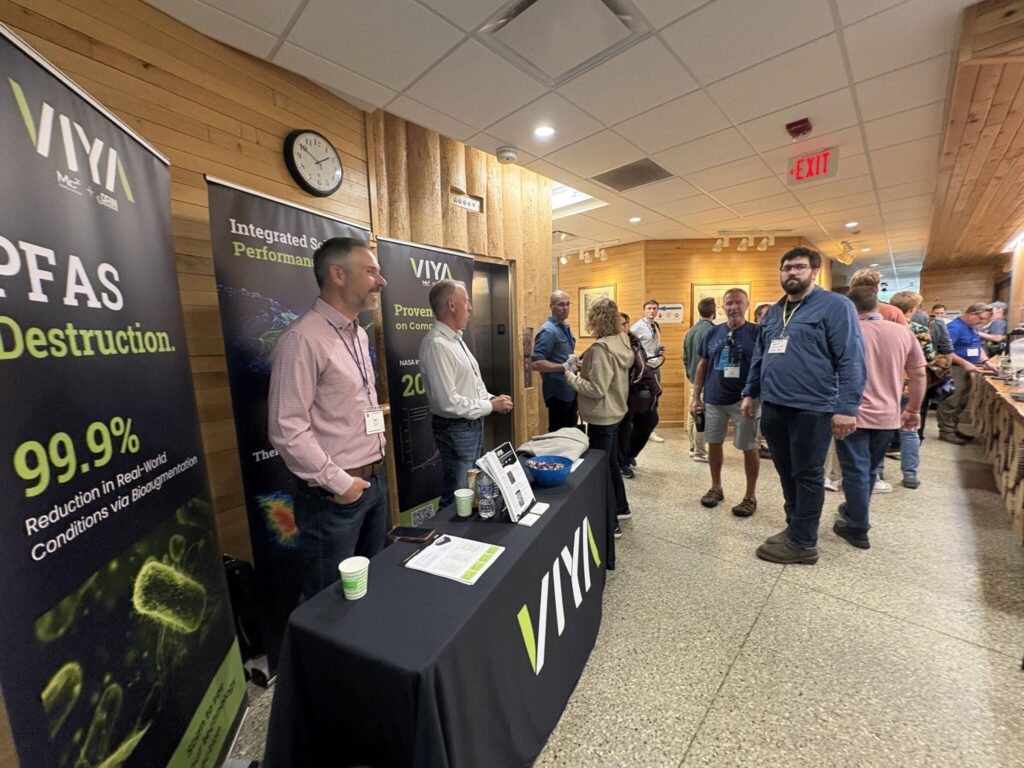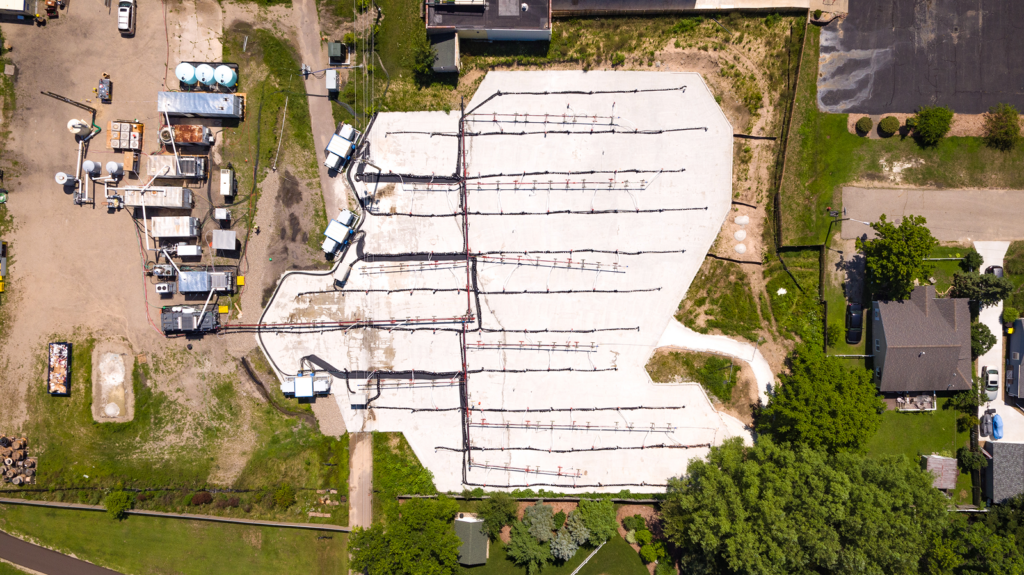
On February 26, 2026, VIYA Environmental hosted its inaugural public webinar — a focused 45-minute session featuring company President Brent Winder and Chief Commercial and Technology Officer Larry Kinsman. The event drew environmental engineers, consulting firms, and site owners navigating some of the most complex PFAS remediation challenges in the field today.
The session was deliberately concise and direct: no slides heavy with disclaimers, no hedged language. Winder and Kinsman came with a clear argument and walked through the evidence behind it.
About the Webinar
The webinar was timed to coincide with VIYA’s public launch. VIYA’s leadership engaged the remediation community with a technical and strategic conversation about where PFAS remediation is heading and how practitioners need to respond.
The Central Argument: Containment Has Run Its Course
The session opened with a provocation that set the tone for everything that followed: containment alone is no longer enough.
This isn’t a new observation in remediation circles — practitioners have debated the limitations of pump-and-treat and physical containment systems for years. What Winder and Kinsman argued is that the industry has now passed the point where containment can be defended as a long-term strategy, for three converging reasons.
First, the regulatory environment has fundamentally shifted. The EPA’s enforceable maximum contaminant levels for PFAS in drinking water, combined with accelerating state-level programs, have changed what regulators will accept. Containment systems that once provided adequate cover are increasingly viewed as interim measures, not endpoints.
Second, the litigation landscape has changed. Site owners who rely on containment face growing long-term liability — not just from regulators, but from communities and, increasingly, from courts. The implicit promise of containment — that contamination is being managed — is no longer a satisfying answer when destruction is demonstrably achievable.
Third, and perhaps most importantly, the technology has caught up. Kinsman walked through the state of PFAS destruction science, making the case that what was once a laboratory concept is now field-deployable at scale. The question is no longer whether to destroy PFAS. The question is how.
What Integrated Destruction Actually Looks Like
A significant portion of the webinar was devoted to what Kinsman called “the translation problem” — the gap between understanding that destruction is necessary and knowing what an integrated destruction strategy actually looks like on a real site.
His answer centered on three principles:
No single technology solves complex contamination. Thermal, chemical, and biological approaches each have strengths and limitations. The right strategy deploys them in the right sequence, at the right scale, for the specific conditions of a given site. Technology selection should follow site characterization — never the other way around.
Phasing matters as much as technology. Sites with layered contamination profiles — different compounds at different depths and concentrations — require phased treatment plans that address each zone strategically. Trying to solve everything at once with a single approach is both technically inefficient and economically wasteful.
Data is the currency of successful remediation. Destruction-based strategies require rigorous monitoring and documentation to demonstrate that PFAS compounds are being destroyed, not relocated. That data is what earns regulatory credit, supports site closure, and ultimately resolves long-term liability.
Key Takeaways for Engineering Partners and Site Owners
For the consulting engineers and site owners in the audience, Winder distilled the session’s implications into a practical frame:
If you are currently relying on a containment strategy for a PFAS-impacted site, now is the time to assess whether a transition to a destruction-based approach is feasible — not because regulation has already mandated it, but because the regulatory and litigation trajectory makes the transition inevitable. Getting ahead of it is a strategic advantage.
If you are in early-stage site assessment, build your remediation strategy around destruction as the endpoint from the start. Designing a containment system with the intention of transitioning later adds cost and complexity that can be avoided with the right planning upfront.
And if you are working on a site with multiple contaminant types — PFAS alongside chlorinated solvents or other VOCs — the integrated platform approach is particularly compelling. The ability to address multiple contaminants through a single coordinated strategy, rather than managing separate vendor relationships for each, reduces risk and improves outcomes.
The VIYA Platform: Built for This Moment
Winder closed the session by grounding the strategic argument in VIYA’s specific capabilities. The company was formed precisely because no single provider had previously combined the thermal remediation depth of McMillan-McGee with the chemical and biological expertise of ORIN Technologies under one roof.
“We didn’t build VIYA to be another remediation contractor,” Winder said. “We built it to be the partner that can actually solve what’s in front of the industry right now.”
That platform — more than 17 issued patents globally, decades of combined field experience, and a technology-agnostic approach that deploys the right solution for each site — is what Winder and Kinsman presented as VIYA’s answer to the industry’s inflection point.
Watch the Recording
Missed the live session? The webinar recording is available on request. Contact us to access the recording and learn more about how VIYA’s integrated remediation platform can support your site.