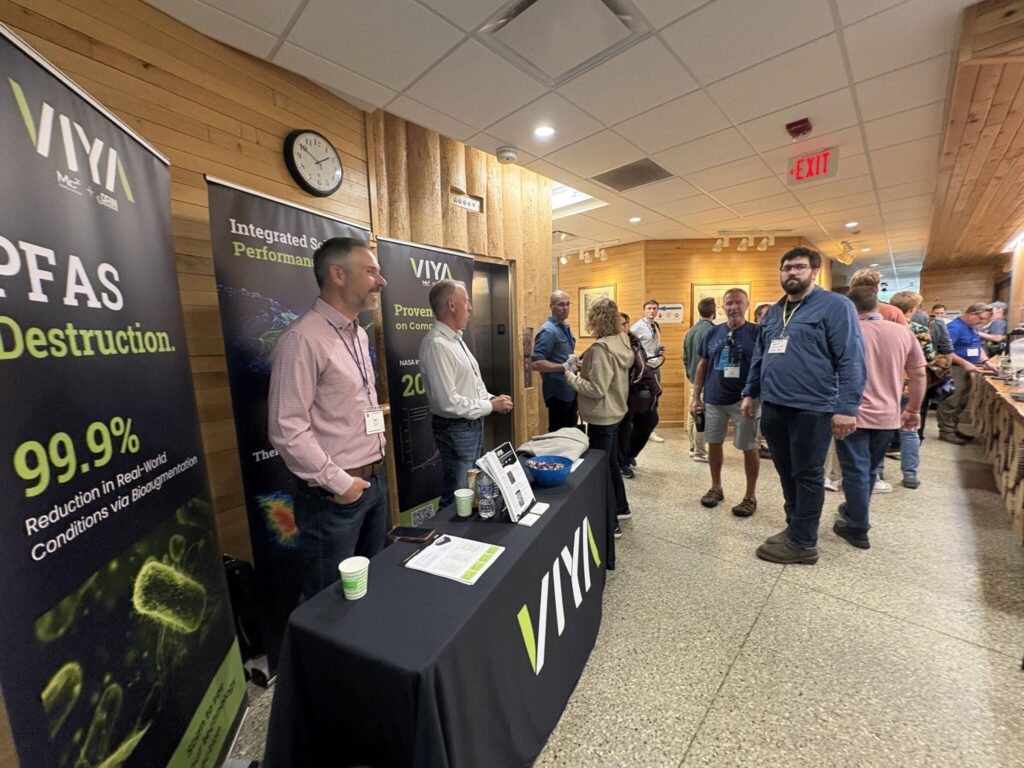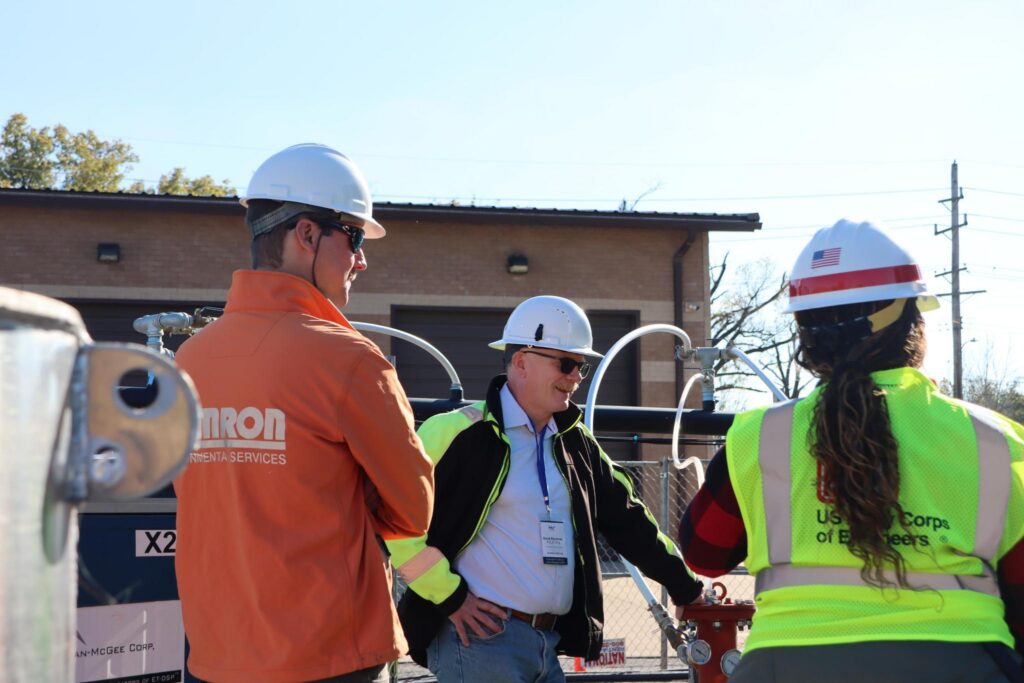
The environmental industry has spent decades trying to solve PFAS contamination from the inside of a laboratory. VIYA President Brent Winder argues that approach has it backwards — and a recent feature in Calgary.Tech makes the case in detail.
In his thought leadership piece, When the Site Becomes the Lab: A New Playbook for PFAS Remediation, Winder lays out the philosophy that has guided VIYA’s approach to one of the most persistent contamination challenges in the industry. The article is worth reading in full, but its central argument is this: the complexity and variability of contaminated sites — their geology, hydrology, contaminant history, and subsurface chemistry — means no fixed playbook can substitute for disciplined, iterative field experimentation.
From Petroleum to PFAS: How BAM™ Was Discovered
The article traces the development of Bioavailable Absorbent Media (BAM), a proprietary carbon-based product derived from pyrolyzed recycled organic biomass. BAM’s dense honeycomb pore structure draws contaminants in and holds them, while simultaneously providing an ideal habitat for microbial colonization that can access and degrade sequestered compounds. The technology wasn’t engineered toward PFAS from the outset — it emerged from years of field observation, starting with petroleum hydrocarbons, and evolved as teams recognized what the data was revealing.
A key discovery came when BAM was deployed alongside targeted microbial consortia near tree root systems. The rhizosphere — the biologically rich zone surrounding plant roots — turned out to be an unexpectedly productive treatment environment. A co-metabolism effect emerged: microorganisms metabolizing one contaminant class were inadvertently influencing the transformation of others. At one site, that dynamic produced PFAS reductions exceeding 90%. The result was eventually patented — not by design, but because the field data demanded it.
When Biological Treatment Isn't Enough
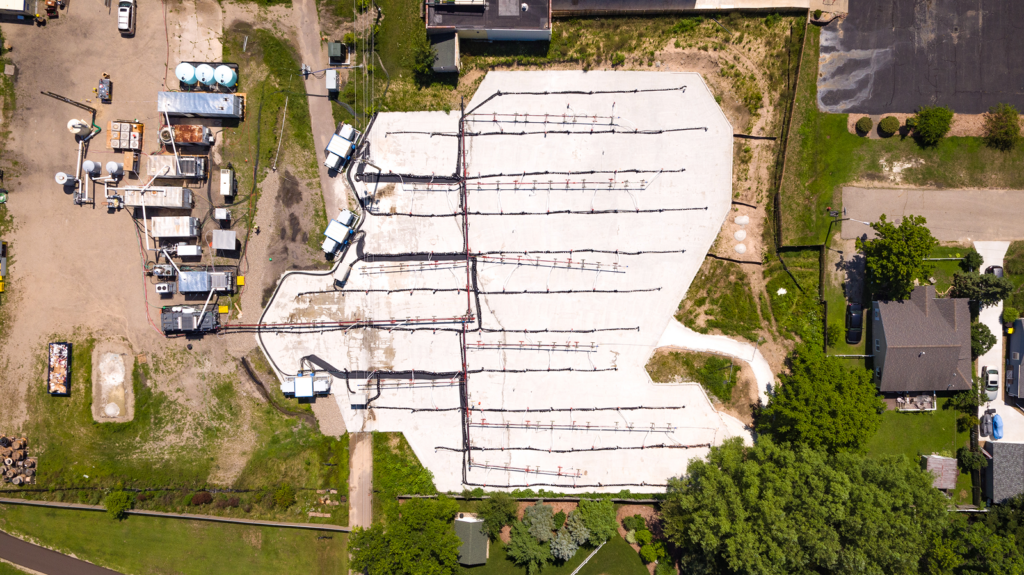
Winder also addresses the role of thermal treatment, the other pillar of VIYA’s approach. Biological methods have real constraints — temperature, soil permeability, contaminant concentration, and subsurface chemistry can all limit what BAM and microbes can achieve. For higher-concentration PFAS or sites with tighter timelines, thermal treatment applies controlled heat directly into the subsurface to mobilize and extract contaminants, increasingly paired with advanced water treatment to destroy compounds rather than simply relocate them.
Refining thermal protocols for PFAS has required the same field-first methodology: dense instrumentation, real-time monitoring, and willingness to adjust based on what the subsurface reveals. PFAS mobility, phase partitioning, and interaction with soil organic matter don’t follow the models established for legacy contaminants.
A Competitive Differentiator Built on Institutional Knowledge
What unifies both approaches — and what Winder argues sets VIYA apart — is the accumulation of practitioner knowledge that only comes from running tightly controlled pilots and learning faster than the problem evolves. The teams that built these methods didn’t wait for a contaminant class to be fully characterized before beginning to work on it. They paired accountability with curiosity, and treated every site as both a remediation challenge and a scientific opportunity.
For asset owners and consultants, the article poses a pointed question: what if RFPs created room for structured experimentation? What if the right evaluation criterion wasn’t only “where has this worked before?” but also “what are you going to try differently here?”
Formed through the 2025 merger of ORIN Technologies and McMillan McGee, VIYA brings together biological, chemical, and thermal remediation capabilities under one team — making that kind of adaptive, multi-technology response possible on complex sites. To explore the full range of approaches VIYA brings to contamination challenges, visit our Solutions page.

Read Brent Winder’s full article on Calgary.Tech: When the Site Becomes the Lab: A New Playbook for PFAS Remediation